BEAT: Posture-Independent Wrist Blood Pressure Monitor
A barometric-inertial sensing system for compensating hydrostatic errors in wrist blood pressure measurement.
Overview
BEAT (Barometric Elevation and Attitude Tracking) is a wrist blood pressure monitoring system designed to reduce posture-related measurement errors. Wrist-worn monitors are convenient, but a vertical offset between the wrist and heart can introduce a hydrostatic pressure error of approximately 0.77 mmHg per centimeter.
The system uses a detachable sensing module. First, the module is placed at heart level to record a zero-reference atmospheric pressure. It is then re-attached to the wrist cuff, where barometric and inertial sensing tracks the wrist’s elevation and orientation during measurement. The system applies a real-time hydrostatic compensation to the oscillometric blood-pressure estimate.
Demonstration
System Design
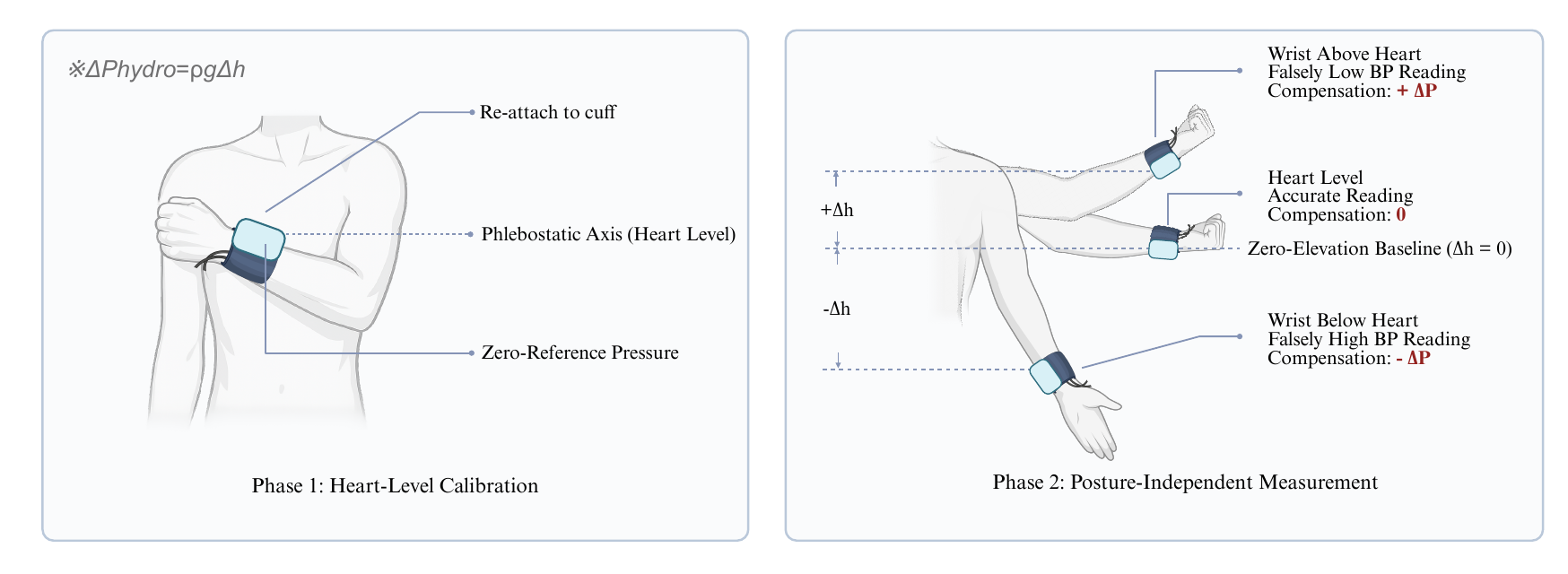
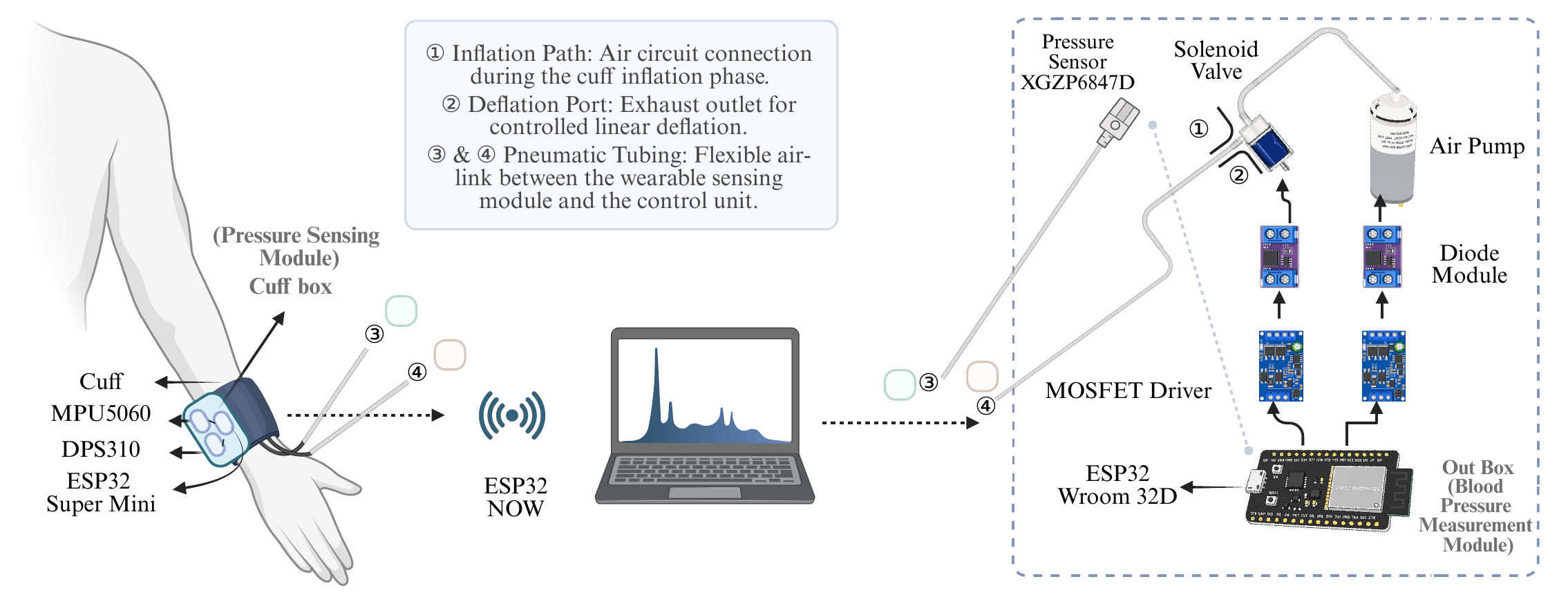
- Detachable sensing module: DPS310 barometric pressure sensor and MPU6050 inertial measurement unit for elevation and attitude tracking.
- Pneumatic measurement unit: ESP32-controlled micro-air pump, solenoid valve, cuff, and piezoresistive pressure sensor.
- Wireless synchronization: ESP-NOW provides low-latency communication between the sensing and pneumatic units.
- Signal processing: Cuff pressure is filtered to extract pulse oscillations, followed by envelope reconstruction and oscillometric SBP/DBP estimation.
- Hydrostatic compensation: The stored heart-level pressure baseline is compared with wrist pressure to estimate vertical displacement and correct the blood-pressure reading.
Signal Processing
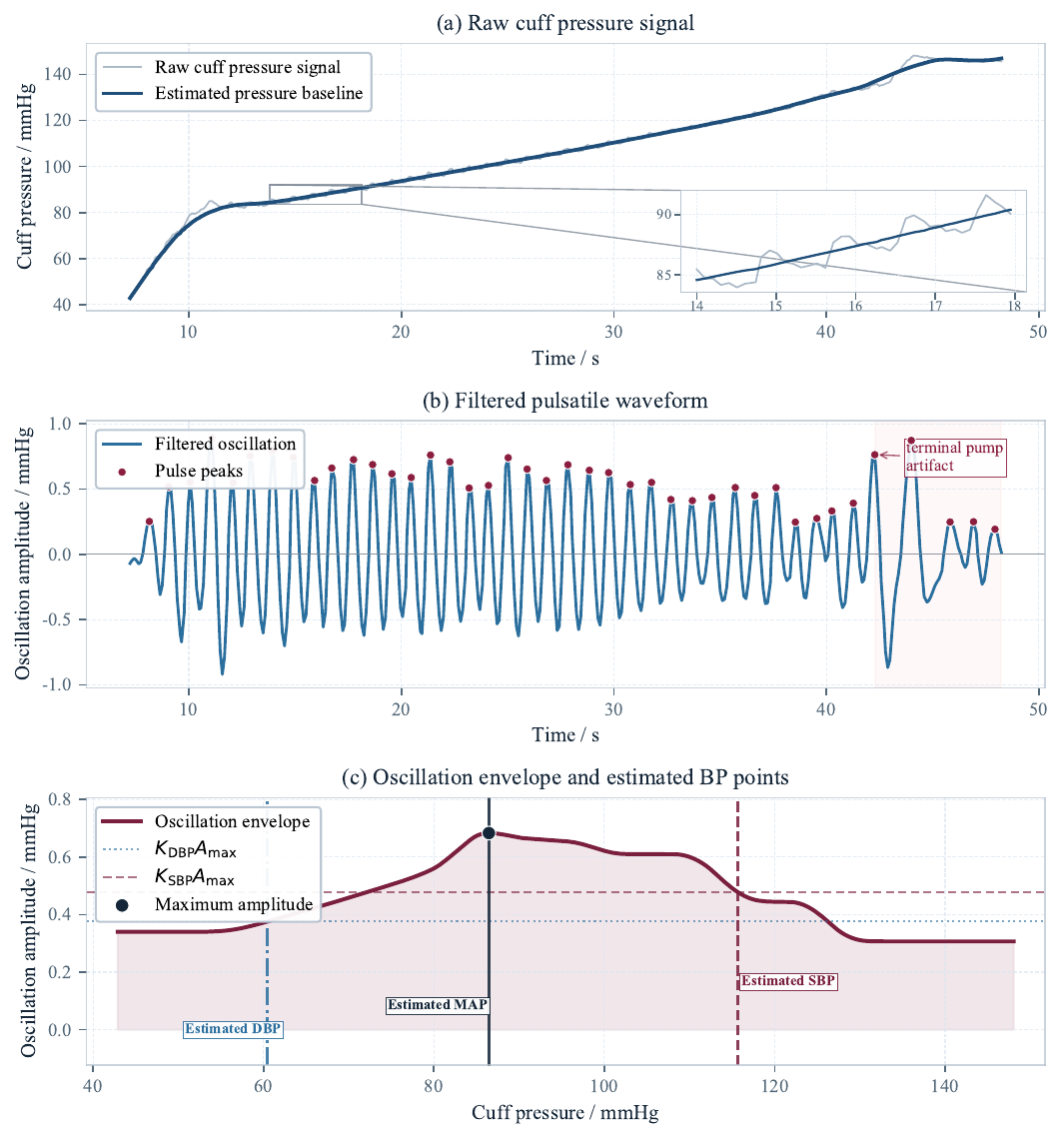
The cuff signal is filtered to isolate pulsatile components, pulse peaks are detected, and an oscillometric envelope is reconstructed to estimate systolic and diastolic pressure.
Preliminary Results
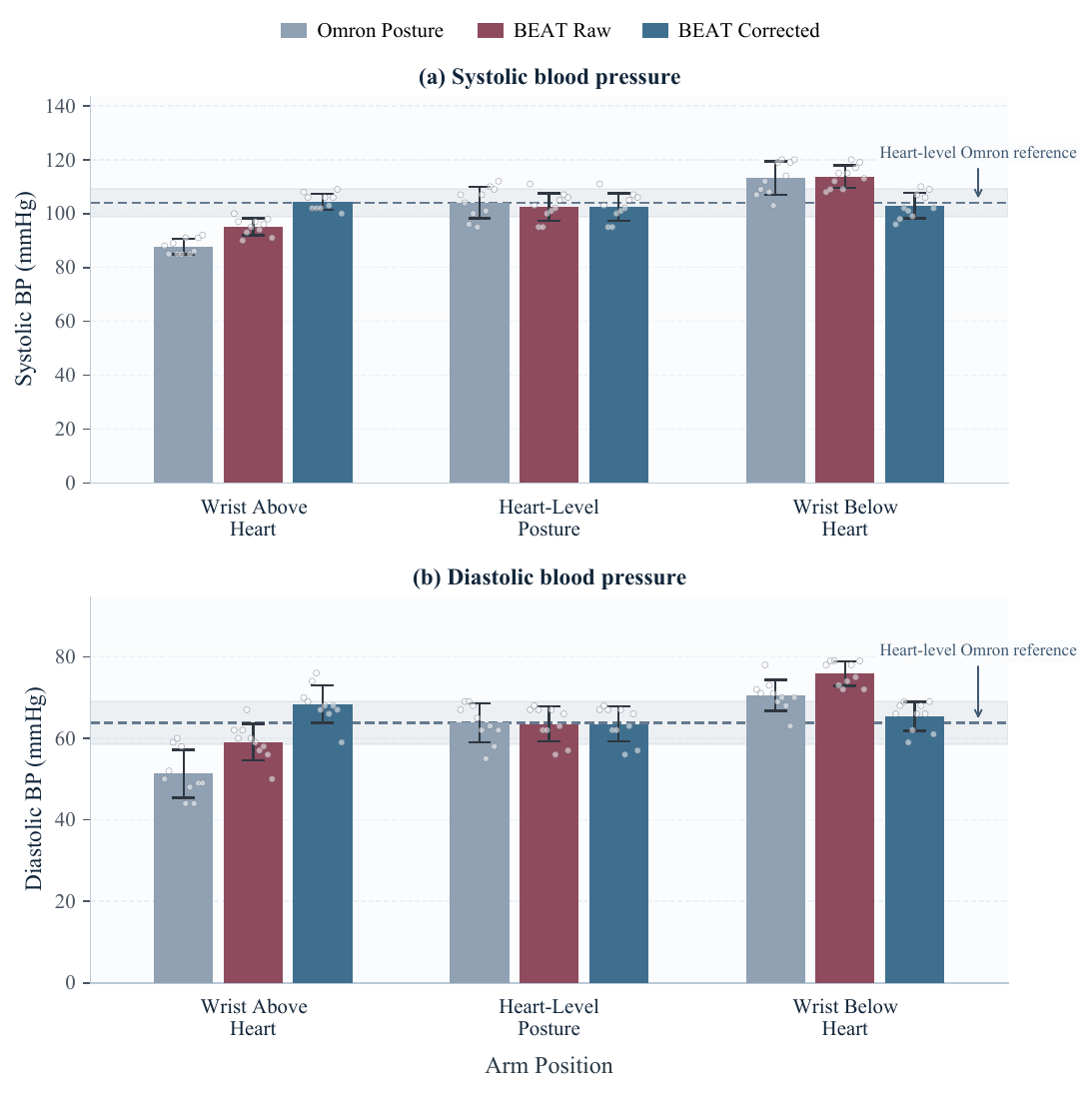
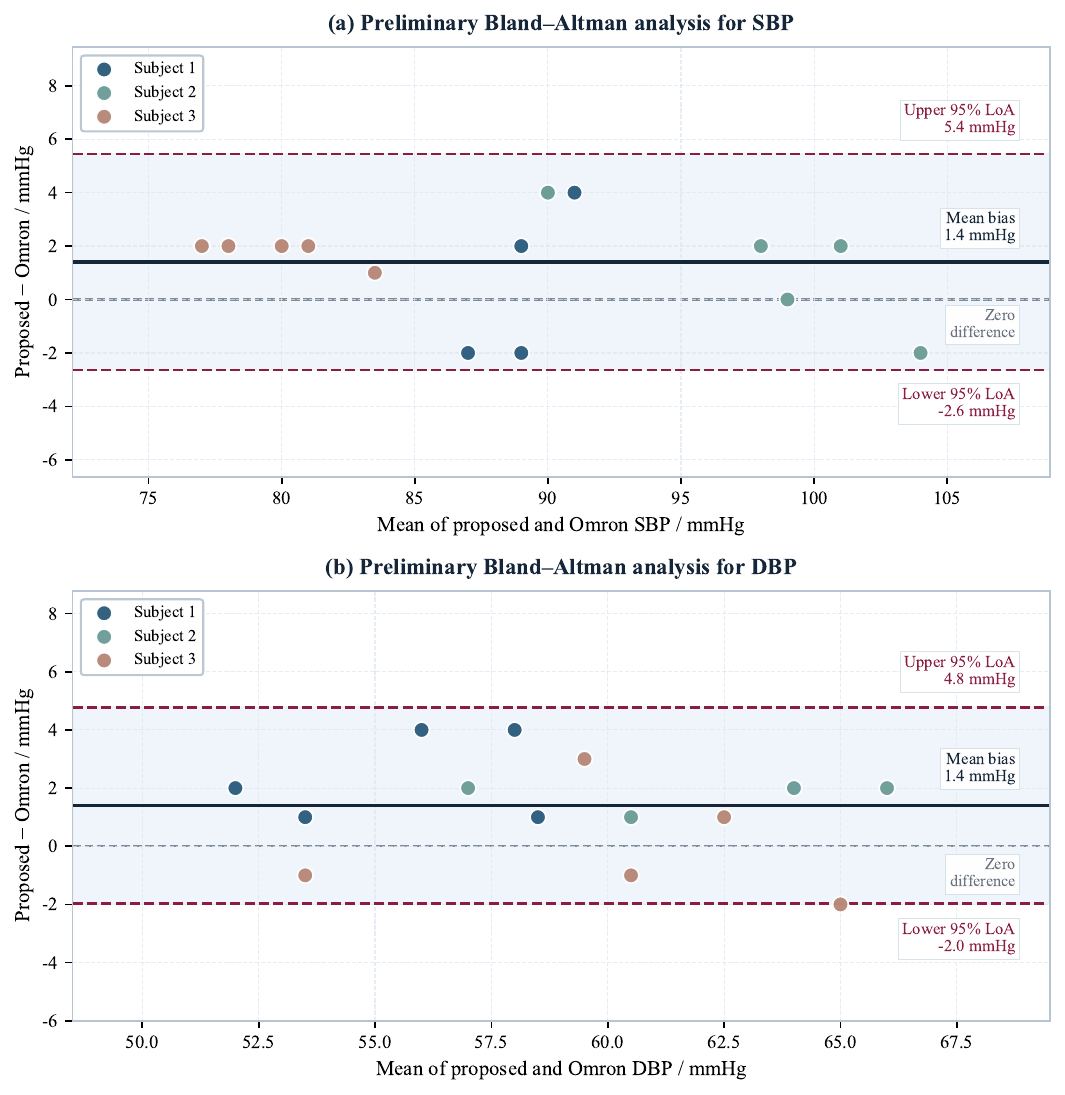
In a pilot feasibility study, the compensated systolic blood pressure measurement achieved an overall mean absolute error of 3.33 mmHg across tested arm postures, compared with 7.61 mmHg before compensation. The heart-level baseline comparison produced a mean bias of 1.40 mmHg against an Omron reference device.
These results suggest that barometric-inertial fusion can reduce posture-induced bias without requiring the user to hold the wrist in a strict heart-level position. The current study is preliminary, with a small sample size, and future work will focus on larger-scale validation and automatic zero-reference calibration.
Project Context
This project was developed for the Fundamentals of Sensing Technology course at Southern University of Science and Technology.